
Optimization and Control of Semiconductor Chip Wafer Manufacturing Systems
10/11/2025
10/11/2025
Semiconductor chips are widely used in daily life to meet the demands of rapidly advancing technology in today's society. The semiconductor chip industry has become a strategic leader in national industrial transformation and is a key indicator of a country's or region's level of modernization and overall national strength.
Wafer manufacturing is upstream in semiconductor chip production and is the segment with the largest investment, most complex processes, highest level of automation, and the most demanding technical requirements. Associate Professor Qiao Yan and his team from the Macau University of Science and Technology (MUST), with funding from the Science and Technology Development Fund (FDCT), are conducting the project "Digital-Twin Driven Scheduling and Control of Wafer Fabrication Systems" to maximize the utilization of semiconductor equipment, enhance the production efficiency of the entire semiconductor production line, meet the complex constraints required for product manufacturing, and ensure the quality of wafer products.
This project, in collaboration with Zhuhai IKAS Intelligent Technology Co., Ltd., located in Hengqin, focuses on multiple actual semiconductor wafer foundry production lines and various semiconductor equipment. It has developed scheduling methods for wafer manufacturing production lines, as well as semiconductor equipment scheduling and control algorithms. At the same time, based on the methods and technologies developed, both parties have collaborated to create an advanced semiconductor planning and scheduling system, an equipment failure real-time decision-making system, and an equipment scheduling module. Some of these systems have already been validated in actual wafer factories and by equipment manufacturers. The advanced semiconductor planning and scheduling system can automate scheduling for complex scenarios and meet intricate process constraints. The equipment failure decision-making system can promptly detect various types of faults and perform maintenance, ensuring the quality of wafer products. The equipment scheduling module can quickly fulfill scheduling requests, respond to urgent situations, flexibly handle various production scenarios, and solve problems at second-level speeds.
Currently, the team continues to engage in in-depth discussions and exploration with Zhuhai IKAS on the scientific and engineering challenges related to the intelligent systems of semiconductor equipment, including intelligent parameter tuning, health monitoring, and predictive maintenance.
Wafer manufacturing is upstream in semiconductor chip production and is the segment with the largest investment, most complex processes, highest level of automation, and the most demanding technical requirements. Associate Professor Qiao Yan and his team from the Macau University of Science and Technology (MUST), with funding from the Science and Technology Development Fund (FDCT), are conducting the project "Digital-Twin Driven Scheduling and Control of Wafer Fabrication Systems" to maximize the utilization of semiconductor equipment, enhance the production efficiency of the entire semiconductor production line, meet the complex constraints required for product manufacturing, and ensure the quality of wafer products.
This project, in collaboration with Zhuhai IKAS Intelligent Technology Co., Ltd., located in Hengqin, focuses on multiple actual semiconductor wafer foundry production lines and various semiconductor equipment. It has developed scheduling methods for wafer manufacturing production lines, as well as semiconductor equipment scheduling and control algorithms. At the same time, based on the methods and technologies developed, both parties have collaborated to create an advanced semiconductor planning and scheduling system, an equipment failure real-time decision-making system, and an equipment scheduling module. Some of these systems have already been validated in actual wafer factories and by equipment manufacturers. The advanced semiconductor planning and scheduling system can automate scheduling for complex scenarios and meet intricate process constraints. The equipment failure decision-making system can promptly detect various types of faults and perform maintenance, ensuring the quality of wafer products. The equipment scheduling module can quickly fulfill scheduling requests, respond to urgent situations, flexibly handle various production scenarios, and solve problems at second-level speeds.
Currently, the team continues to engage in in-depth discussions and exploration with Zhuhai IKAS on the scientific and engineering challenges related to the intelligent systems of semiconductor equipment, including intelligent parameter tuning, health monitoring, and predictive maintenance.
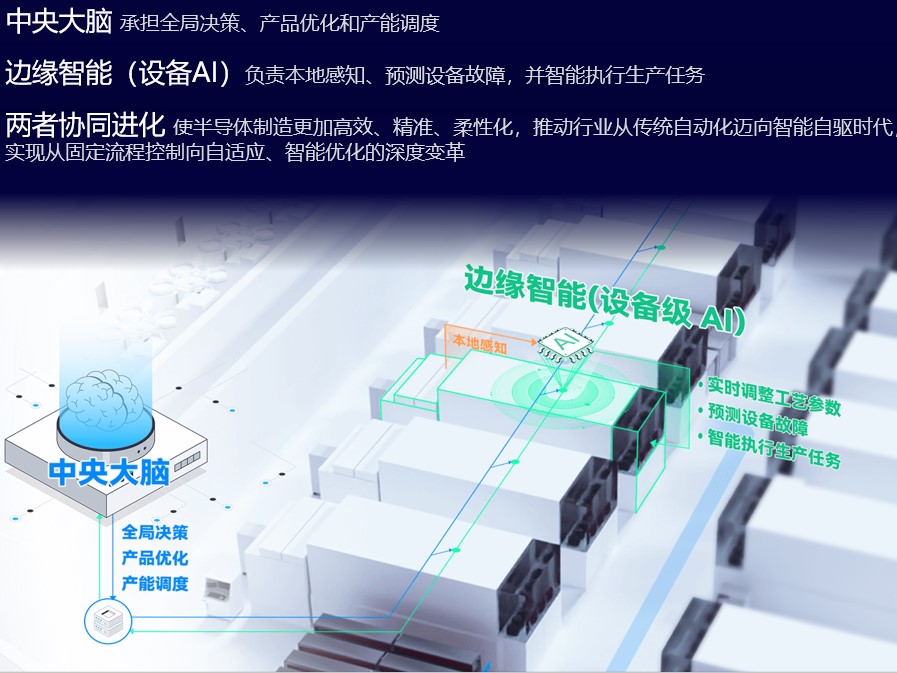
Digital-twin Driven Wafer Fabrication Systems
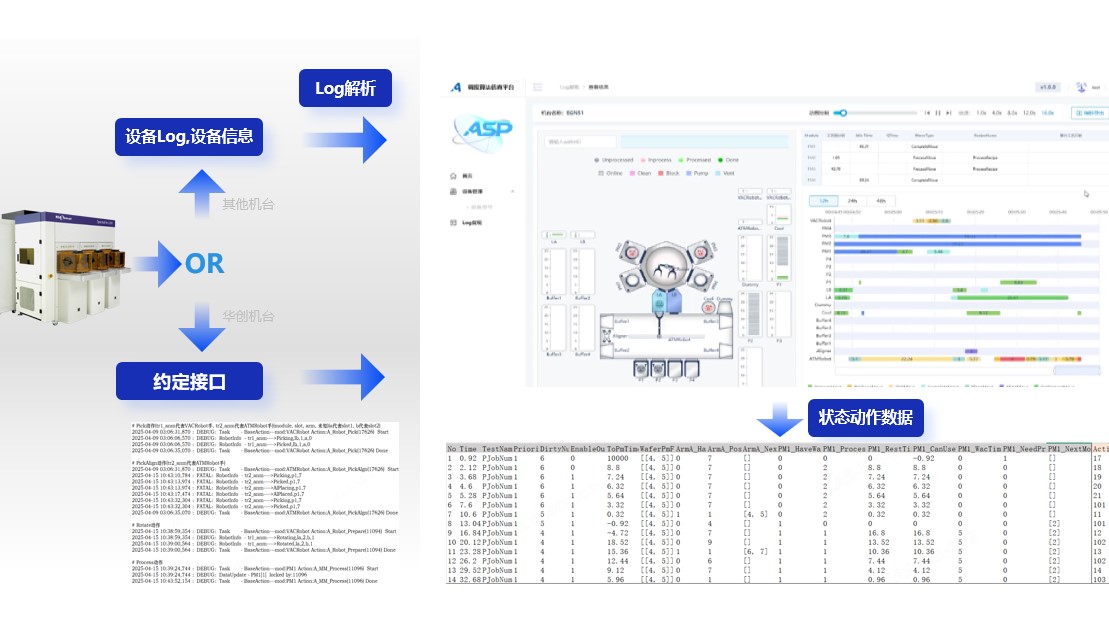
Semiconductor Equipment Digital Twin Simulation Platform
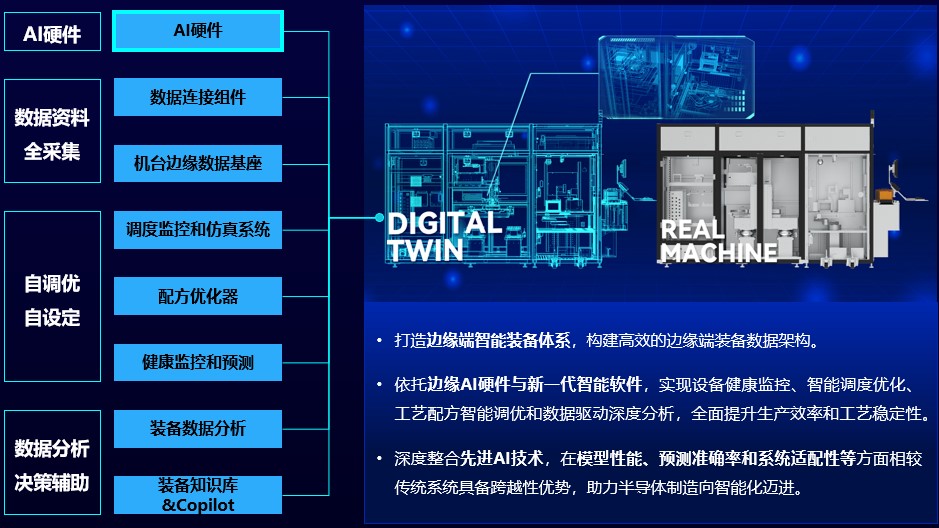
Intelligent System for Semiconductor Equipment

Office address: Avenida do Infante D. Henrique, No. 43-53A, Macau Square, 8th Floor, Unit C and 11th Floor, Unit K, Macao (To apply for project funding, please go to 11th Floor, Unit K)
Office hours: Monday to Thursday: 9:00-13:00, 14:30-17:45;Friday: 9:00-13:00, 14:30-17:30;Tel.: 28788777
Copyright(C) 2021 ALL right reserved.
Office hours: Monday to Thursday: 9:00-13:00, 14:30-17:45;Friday: 9:00-13:00, 14:30-17:30;Tel.: 28788777
Copyright(C) 2021 ALL right reserved.