
FDCT Deepens Sci-Tech Talent Cultivation and Exchange: FDCT and CAS Co-Host Training Course for Macao’s Workers in Science and Technology
23/05/2026
23/05/2026
To give Macao sci-tech professionals a better understanding of national policies and roadmaps for sci-tech innovation, support Macao’s integration into the country’s overall development plan, and draw on Hefei’s successful experience in driving high-quality economic growth through technological innovation, the Macao Science and Technology Development Fund (FDCT) and the Chinese Academy of Sciences (CAS) co-hosted the “Training Course for Macao’s Workers in Science and Technology” again in Hefei, Anhui Province, from May 18 to 22.
Joining hands with CAS to cultivate sci-tech talent in Macao
The FDCT has co-organized training courses with CAS for sci-tech professionals since 2016, consistently investing in Macao’s talent development while promoting exchanges and collaboration. Past courses have taken participants to Beijing, Guangzhou, Shenzhen, Dongguan, Foshan, and Hefei.
This year’s opening ceremony was held on May 19. Attendees and speakers included Cheang Kun Wai, Member of the FDCT Administrative Committee; Li Fangfang, Director of the Hong Kong, Macao & Taiwan Affairs Office, CAS; and Qu Zhe, Vice President of the Hefei Institutes of Physical Science, CAS.
Cheang Kun Wai outlined the Macao SAR Government’s latest plans and initiatives for sci-tech innovation, encouraging the trainees to seize the learning opportunity to observe widely, think deeply, and learn actively. He urged them to gain a thorough understanding of the directions and requirements of the nation’s sci-tech development during the 15th Five-Year Plan period, align their efforts with Macao’s Third Five-Year Plan, and learn from Hefei’s success in deep industry-university-research integration. He also inspired the trainees to leverage Macao’s strengths to serve the nation’s needs while fostering exchanges and collaboration with their Hefei-based peers to advance Macao’s technological development and transform more research outcomes into real-world applications.
Li Fangfang noted that CAS has always placed great importance on sci-tech cooperation and exchange with Macao. By jointly applying for research projects, establishing laboratories, and organizing international academic salons for young scholars, CAS has continued to deepen collaborative innovation, create more opportunities for sci-tech talent exchange between the Chinese mainland and Macao, and develop stronger ties with the city. This year marks the beginning of the nation’s 15th Five-Year Plan for National Economic and Social Development, which further elevates self-reliance and strength in science and technology to a core strategic priority. She expressed hope that the trainees would learn from Hefei’s experience in technological and industrial innovation through policy study and site visits, while combining Macao’s unique strengths to better serve the region’s economic diversification.
Qu Zhe welcomed the Macao training group back to Hefei. He stressed that Hefei has long championed using technological innovation to drive industrial innovation, raising the profile of the “Hefei model” and the “city of venture capital”. This training course included specially designed symposiums and site visits so that the trainees from Macao could experience the nation’s major research facilities and innovation ecosystem firsthand.
Deepening its understanding of mainland sci-tech development and integration into the national development plan
The training course featured a rich curriculum. Bao Shujun, Division Director of the International Cooperation Center of the National Development and Reform Commission; Wang Xiaojiong, Researcher at the Institute of New Quality Productive Forces, CAS; Gao Zhiyuan, Chief Engineer of the Hefei Municipal Science and Technology Bureau; and Li Chen, Division Director of the Science Center Work Division, Hefei Municipal Development and Reform Commission, delivered lectures on topics including policies regarding new quality productive forces during the 15th Five-Year Plan period, the role of CAS in building international sci-tech innovation centers, Hefei’s policies and practices for integrating technological and industrial innovation, and the development of the Hefei Comprehensive National Science Center. The trainees visited major national research facilities, including the Steady High Magnetic Field Facility, nuclear fusion experimental devices, and the University of Science and Technology of China (USTC) light source. They also toured institutions such as the Hefei Institutes of Physical Science, USTC, and Hefei Binhu Science City. Additionally, they visited renowned companies, including iFLYTEK, BOE, and NIO, and returned with a wealth of insights.
Gaining valuable experience to enhance technology innovation and management capabilities
The training course brought together 18 core personnel from Macao’s higher education institutions, hospitals, and tech enterprises. Through this course, the trainees deepened their understanding of the national technology innovation landscape and of policies for developing new quality productive forces during the 15th Five-Year Plan period. They were particularly impressed by Hefei’s successful experience in facilitating tech enterprise growth. The trainees generally agreed that the course was effective: it broadened their perspectives and deepened their understanding of the role of “technological innovation + industry” integration in driving socioeconomic development. The course also boosted their confidence in contributing to Macao’s technological innovation capacity and adequate economic diversification.
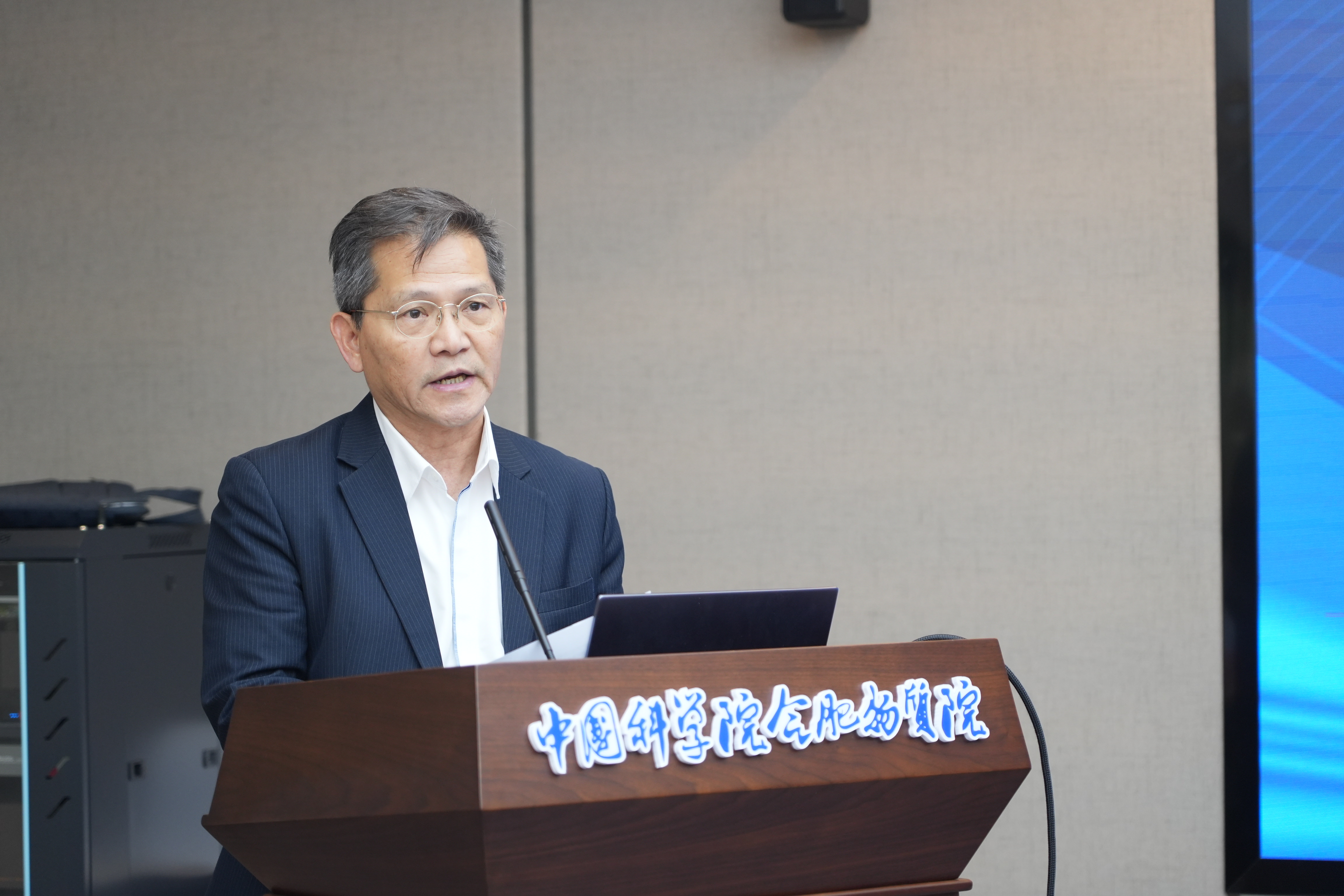
FDCT Committee Member Cheang Kun Wai addresses the opening ceremony.
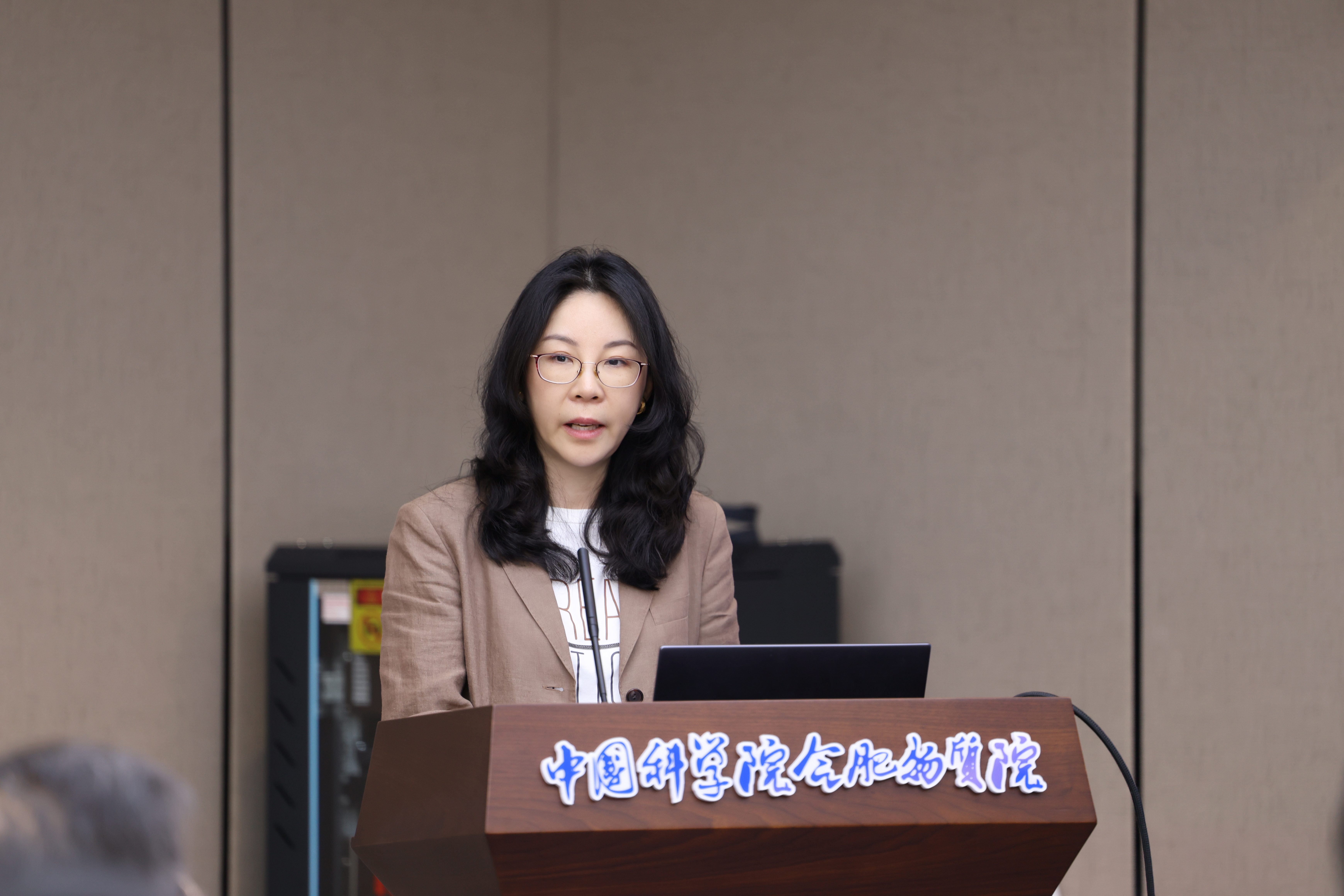
Director Li Fangfang addresses the opening ceremony.
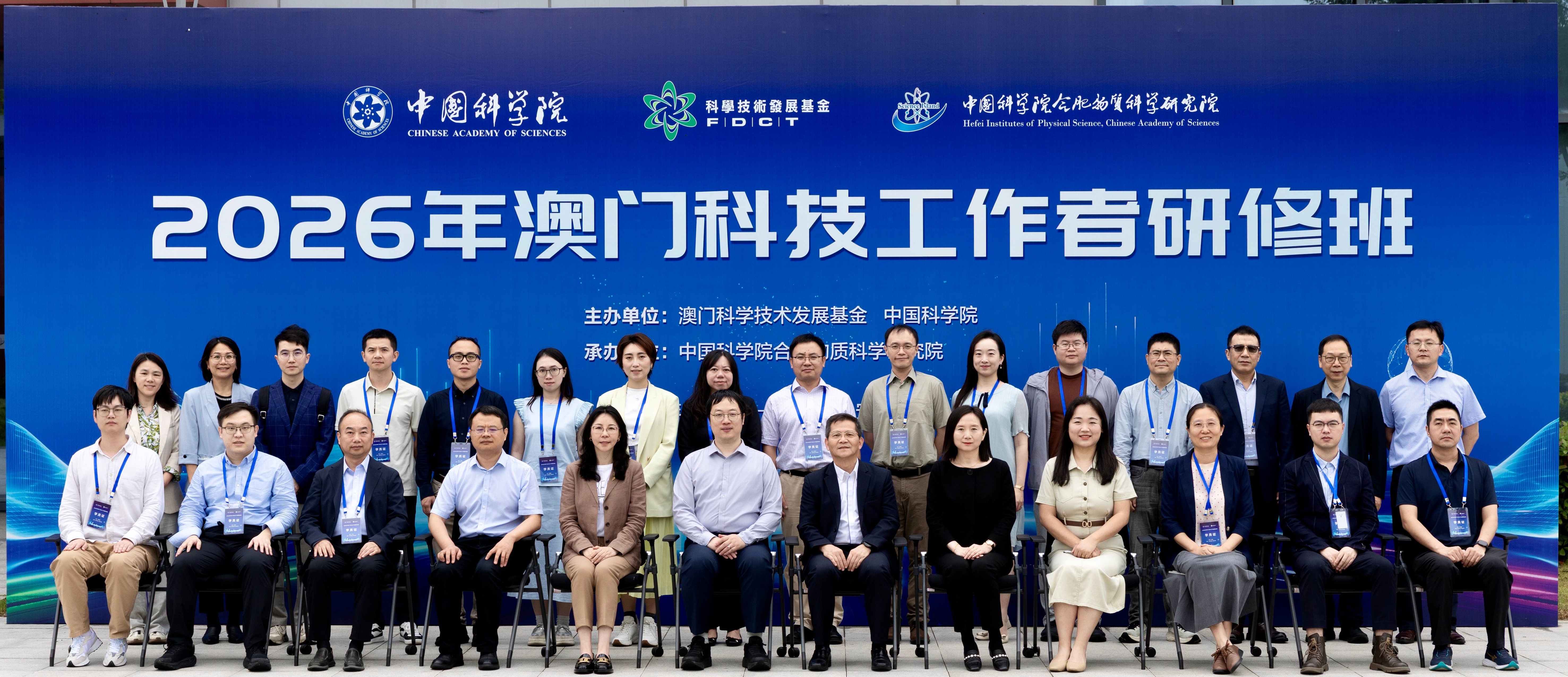
Guests at the opening ceremony take a group photo with the trainees.
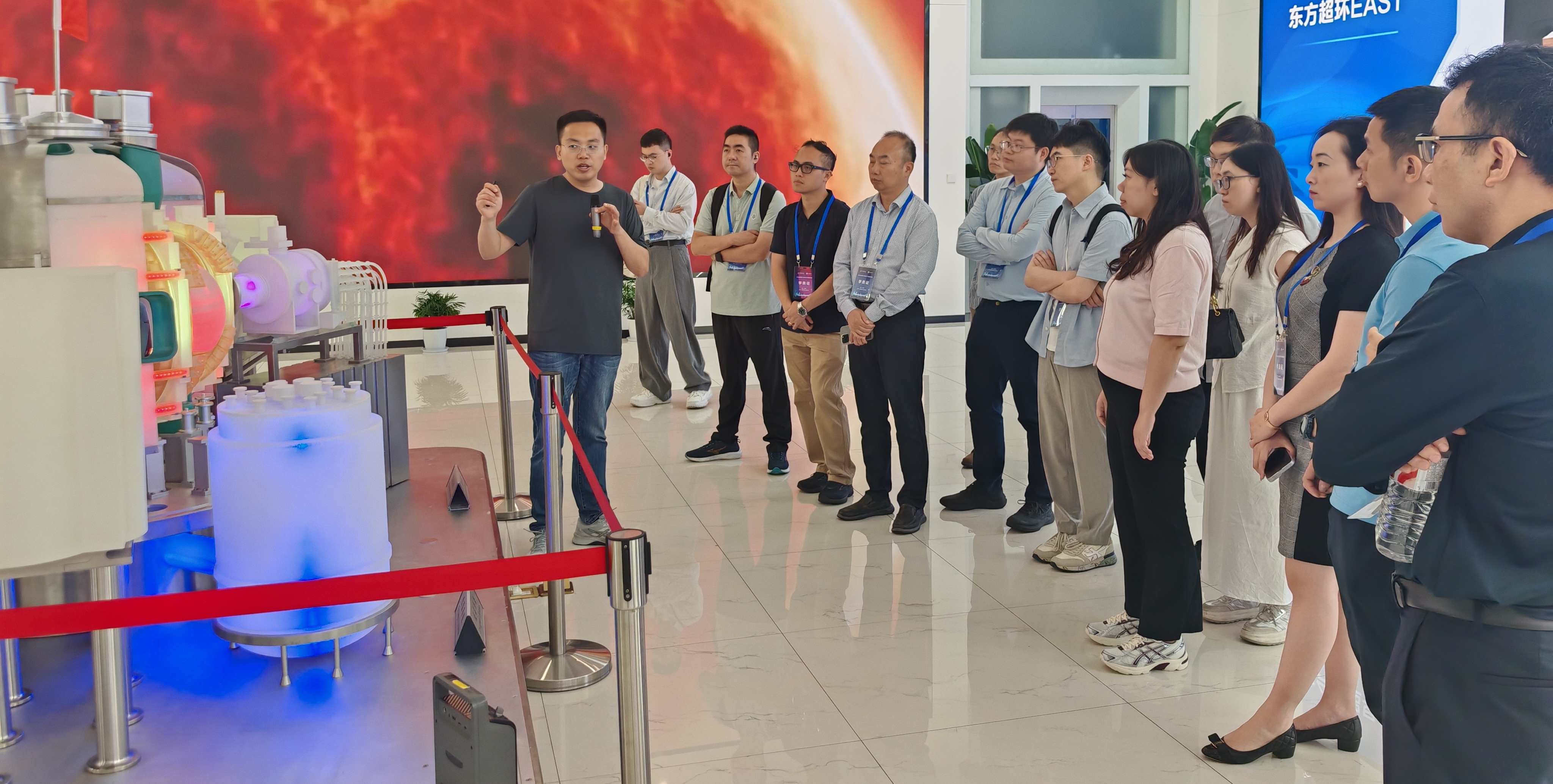 The trainees tour the Experimental Advanced Superconducting Tokamak (EAST) nuclear fusion device.
Joining hands with CAS to cultivate sci-tech talent in Macao
The FDCT has co-organized training courses with CAS for sci-tech professionals since 2016, consistently investing in Macao’s talent development while promoting exchanges and collaboration. Past courses have taken participants to Beijing, Guangzhou, Shenzhen, Dongguan, Foshan, and Hefei.
This year’s opening ceremony was held on May 19. Attendees and speakers included Cheang Kun Wai, Member of the FDCT Administrative Committee; Li Fangfang, Director of the Hong Kong, Macao & Taiwan Affairs Office, CAS; and Qu Zhe, Vice President of the Hefei Institutes of Physical Science, CAS.
Cheang Kun Wai outlined the Macao SAR Government’s latest plans and initiatives for sci-tech innovation, encouraging the trainees to seize the learning opportunity to observe widely, think deeply, and learn actively. He urged them to gain a thorough understanding of the directions and requirements of the nation’s sci-tech development during the 15th Five-Year Plan period, align their efforts with Macao’s Third Five-Year Plan, and learn from Hefei’s success in deep industry-university-research integration. He also inspired the trainees to leverage Macao’s strengths to serve the nation’s needs while fostering exchanges and collaboration with their Hefei-based peers to advance Macao’s technological development and transform more research outcomes into real-world applications.
Li Fangfang noted that CAS has always placed great importance on sci-tech cooperation and exchange with Macao. By jointly applying for research projects, establishing laboratories, and organizing international academic salons for young scholars, CAS has continued to deepen collaborative innovation, create more opportunities for sci-tech talent exchange between the Chinese mainland and Macao, and develop stronger ties with the city. This year marks the beginning of the nation’s 15th Five-Year Plan for National Economic and Social Development, which further elevates self-reliance and strength in science and technology to a core strategic priority. She expressed hope that the trainees would learn from Hefei’s experience in technological and industrial innovation through policy study and site visits, while combining Macao’s unique strengths to better serve the region’s economic diversification.
Qu Zhe welcomed the Macao training group back to Hefei. He stressed that Hefei has long championed using technological innovation to drive industrial innovation, raising the profile of the “Hefei model” and the “city of venture capital”. This training course included specially designed symposiums and site visits so that the trainees from Macao could experience the nation’s major research facilities and innovation ecosystem firsthand.
Deepening its understanding of mainland sci-tech development and integration into the national development plan
The training course featured a rich curriculum. Bao Shujun, Division Director of the International Cooperation Center of the National Development and Reform Commission; Wang Xiaojiong, Researcher at the Institute of New Quality Productive Forces, CAS; Gao Zhiyuan, Chief Engineer of the Hefei Municipal Science and Technology Bureau; and Li Chen, Division Director of the Science Center Work Division, Hefei Municipal Development and Reform Commission, delivered lectures on topics including policies regarding new quality productive forces during the 15th Five-Year Plan period, the role of CAS in building international sci-tech innovation centers, Hefei’s policies and practices for integrating technological and industrial innovation, and the development of the Hefei Comprehensive National Science Center. The trainees visited major national research facilities, including the Steady High Magnetic Field Facility, nuclear fusion experimental devices, and the University of Science and Technology of China (USTC) light source. They also toured institutions such as the Hefei Institutes of Physical Science, USTC, and Hefei Binhu Science City. Additionally, they visited renowned companies, including iFLYTEK, BOE, and NIO, and returned with a wealth of insights.
Gaining valuable experience to enhance technology innovation and management capabilities
The training course brought together 18 core personnel from Macao’s higher education institutions, hospitals, and tech enterprises. Through this course, the trainees deepened their understanding of the national technology innovation landscape and of policies for developing new quality productive forces during the 15th Five-Year Plan period. They were particularly impressed by Hefei’s successful experience in facilitating tech enterprise growth. The trainees generally agreed that the course was effective: it broadened their perspectives and deepened their understanding of the role of “technological innovation + industry” integration in driving socioeconomic development. The course also boosted their confidence in contributing to Macao’s technological innovation capacity and adequate economic diversification.
FDCT Committee Member Cheang Kun Wai addresses the opening ceremony.
Director Li Fangfang addresses the opening ceremony.
Guests at the opening ceremony take a group photo with the trainees.
The trainees tour the Experimental Advanced Superconducting Tokamak (EAST) nuclear fusion device.
Office address: Avenida do Infante D. Henrique, No. 43-53A, Macau Square, 8th Floor, Unit C and 11th Floor, Unit K, Macao (To apply for project funding, please go to 11th Floor, Unit K)
Office hours: Monday to Thursday: 9:00-13:00, 14:30-17:45;Friday: 9:00-13:00, 14:30-17:30;Tel.: 28788777
Copyright(C) 2021 ALL right reserved.
Office hours: Monday to Thursday: 9:00-13:00, 14:30-17:45;Friday: 9:00-13:00, 14:30-17:30;Tel.: 28788777
Copyright(C) 2021 ALL right reserved.