
2026 Policy Briefing on the Macao-Hengqin Joint Funding Scheme for Industry-University-Research Collaboration Held in Hengqin
09/01/2026
09/01/2026
The Science and Technology Development Fund (hereinafter referred to as the “FDCT”) and the Economic Development Bureau of the Guangdong-Macao In-Depth Cooperation Zone in Hengqin (hereinafter referred to as the “ECDHengqin”) recently co-hosted the 2026 Policy Briefing on the Macao-Hengqin Joint Funding Scheme for Industry-University-Research Collaboration in the Cooperation Zone. U U Sang, President of the Administrative Committee of the FDCT, and Wu Chuangwei, Director of the ECDHengqin, attended the briefing and delivered speeches. More than 100 representatives from Macao and Hengqin technology enterprises participated in the event.
Representatives from Hengqin-based enterprises stated that technological development relies heavily on R&D investment. They asserted that the approach of “enterprises in the Cooperation Zone raising problems, Macao universities providing solutions” can fully leverage their respective advantages and strengths. In recent years, concrete results from Macao-Hengqin industry-university-research collaboration have gradually emerged. The industry expects that, through collaboration between technology departments in Macao and Hengqin, even greater industry-university-research performance can be achieved in 2026.
Macao-Hengqin Industry-University-Research Collaboration Listed as One of the Most Critical Tasks
In his speech, U U Sang noted that the 2025 Central Economic Work Conference explicitly reaffirmed the construction of an international science and technology innovation center in the Guangdong-Hong Kong-Macao Greater Bay Area, marking an accelerated phase in the region’s science and innovation development. The “Research and Development in Macao, Achievement Transformation in Hengqin” model has already seen projects progress in sequence. Notably, two “Guangdong-Hong Kong-Macao Joint Laboratories”, led by Macao research institutions, were officially licensed in November last year. Their operations are closely linked to Macao and the Cooperation Zone’s innovation efforts, reflecting increasingly mature conditions for Macao-Hengqin industry-university-research collaboration. According to the FDCT’s work plan for this year, promoting Macao-Hengqin industry-university-research collaboration is listed as one of the most critical tasks.
Wu Chuangwei noted that this briefing uses the Macao-Hengqin joint funding scheme for industry-university-research collaboration as an entry point, focusing on interpreting core policy highlights and key application points. He advocated for enhanced collaboration between science and technology innovation entities in Macao and Hengqin, to support adequate economic diversification in Macao and integration between the two regions. He particularly called on participating representatives to proactively connect with high-quality resources from Macao universities and research institutions, boldly propose technical demands, actively engage in technical cooperation, overcome technical challenges through collaboration, and improve core competitiveness. He also expressed hope that Macao’s scientific research capacity would leverage its strengths and translate more cutting-edge technologies and innovative results into practical applications in Hengqin.
During the briefing, representatives from the FDCT and the ECDHengqin introduced the policy background and implementation procedures of the Macao-Hengqin joint funding scheme for industry-university-research collaboration. They provided detailed interpretations of technical demand submission points for enterprises, application steps, review methods, and criteria. They also explained project implementation details, including that enterprises submitting demands must provide matching investment of at least twice the amount funded by the FDCT, that screening criteria for technical demands include whether the development direction aligns with Macao-Hengqin development, whether outcome indicators are clear, and whether the technical demands correspond to the research strengths of Macao higher education institutions, and that the research duration shall not exceed three years.
Active On-Site Interaction and Targeted Q&A Facilitating Policy Implementation
During the discussion session, representatives from multiple participating enterprises actively asked questions about practical issues, such as application requirements, project execution management, and the scope and quantity regulations of technical demands. The FDCT and ECDHengqin representatives responded in detail on-site, creating a lively, interactive atmosphere.
After the briefing, several enterprise representatives commented that the content was substantial and the interpretations were clear. This significantly enhanced their understanding of the policies and increased their willingness to implement them. They hope that through this policy linkage, they can efficiently connect with Macao’s R&D resources, strengthen their technological innovation capabilities, and facilitate the rapid translation and application of research outcomes in the Cooperation Zone.
This briefing effectively built a bridge between policy and industry, promoting Macao-Hengqin industry-university-research collaboration through precise alignment with technology enterprise demands. Moving forward, both parties will continue to intensify policy promotion, optimize communication and coordination mechanisms, integrate the industrial and research strengths of both regions, and better align with and serve the national development strategy.
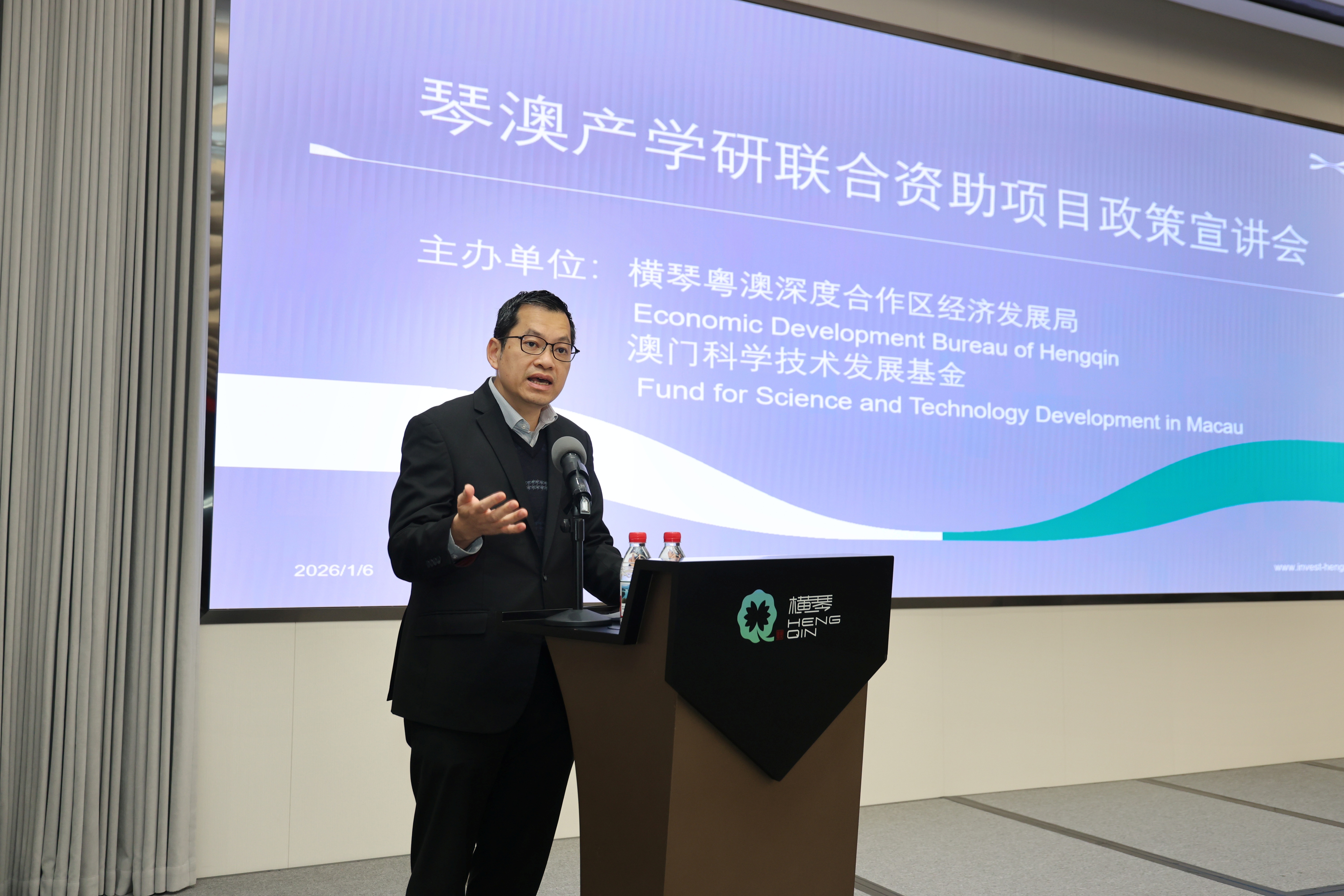 U U Sang, President of the Administrative Committee of the FDCT, delivering a speech at the event
Representatives from Hengqin-based enterprises stated that technological development relies heavily on R&D investment. They asserted that the approach of “enterprises in the Cooperation Zone raising problems, Macao universities providing solutions” can fully leverage their respective advantages and strengths. In recent years, concrete results from Macao-Hengqin industry-university-research collaboration have gradually emerged. The industry expects that, through collaboration between technology departments in Macao and Hengqin, even greater industry-university-research performance can be achieved in 2026.
Macao-Hengqin Industry-University-Research Collaboration Listed as One of the Most Critical Tasks
In his speech, U U Sang noted that the 2025 Central Economic Work Conference explicitly reaffirmed the construction of an international science and technology innovation center in the Guangdong-Hong Kong-Macao Greater Bay Area, marking an accelerated phase in the region’s science and innovation development. The “Research and Development in Macao, Achievement Transformation in Hengqin” model has already seen projects progress in sequence. Notably, two “Guangdong-Hong Kong-Macao Joint Laboratories”, led by Macao research institutions, were officially licensed in November last year. Their operations are closely linked to Macao and the Cooperation Zone’s innovation efforts, reflecting increasingly mature conditions for Macao-Hengqin industry-university-research collaboration. According to the FDCT’s work plan for this year, promoting Macao-Hengqin industry-university-research collaboration is listed as one of the most critical tasks.
Wu Chuangwei noted that this briefing uses the Macao-Hengqin joint funding scheme for industry-university-research collaboration as an entry point, focusing on interpreting core policy highlights and key application points. He advocated for enhanced collaboration between science and technology innovation entities in Macao and Hengqin, to support adequate economic diversification in Macao and integration between the two regions. He particularly called on participating representatives to proactively connect with high-quality resources from Macao universities and research institutions, boldly propose technical demands, actively engage in technical cooperation, overcome technical challenges through collaboration, and improve core competitiveness. He also expressed hope that Macao’s scientific research capacity would leverage its strengths and translate more cutting-edge technologies and innovative results into practical applications in Hengqin.
During the briefing, representatives from the FDCT and the ECDHengqin introduced the policy background and implementation procedures of the Macao-Hengqin joint funding scheme for industry-university-research collaboration. They provided detailed interpretations of technical demand submission points for enterprises, application steps, review methods, and criteria. They also explained project implementation details, including that enterprises submitting demands must provide matching investment of at least twice the amount funded by the FDCT, that screening criteria for technical demands include whether the development direction aligns with Macao-Hengqin development, whether outcome indicators are clear, and whether the technical demands correspond to the research strengths of Macao higher education institutions, and that the research duration shall not exceed three years.
Active On-Site Interaction and Targeted Q&A Facilitating Policy Implementation
During the discussion session, representatives from multiple participating enterprises actively asked questions about practical issues, such as application requirements, project execution management, and the scope and quantity regulations of technical demands. The FDCT and ECDHengqin representatives responded in detail on-site, creating a lively, interactive atmosphere.
After the briefing, several enterprise representatives commented that the content was substantial and the interpretations were clear. This significantly enhanced their understanding of the policies and increased their willingness to implement them. They hope that through this policy linkage, they can efficiently connect with Macao’s R&D resources, strengthen their technological innovation capabilities, and facilitate the rapid translation and application of research outcomes in the Cooperation Zone.
This briefing effectively built a bridge between policy and industry, promoting Macao-Hengqin industry-university-research collaboration through precise alignment with technology enterprise demands. Moving forward, both parties will continue to intensify policy promotion, optimize communication and coordination mechanisms, integrate the industrial and research strengths of both regions, and better align with and serve the national development strategy.
U U Sang, President of the Administrative Committee of the FDCT, delivering a speech at the event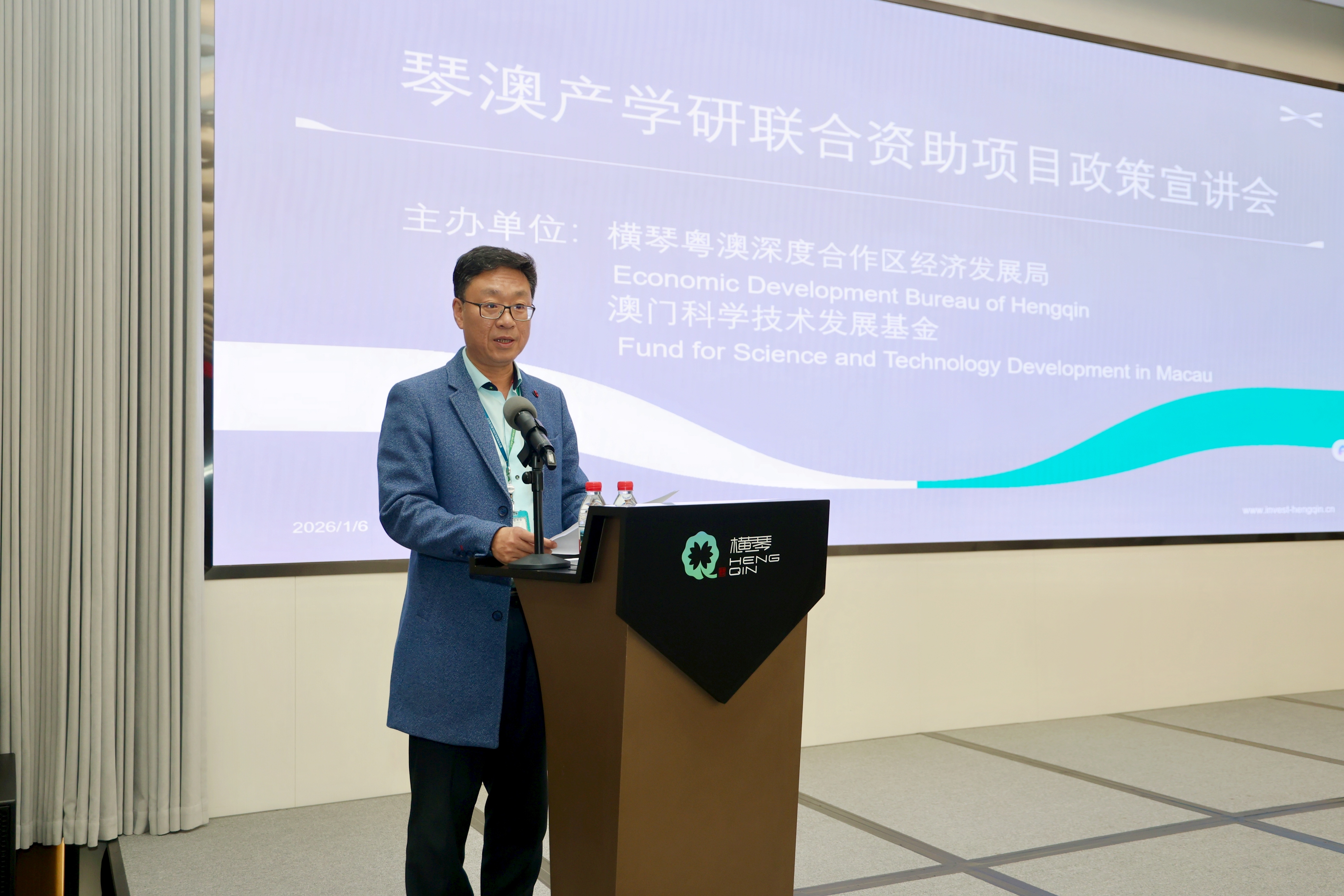 Wu Chuangwei, Director of the ECDHengqin, delivering a speech at the event
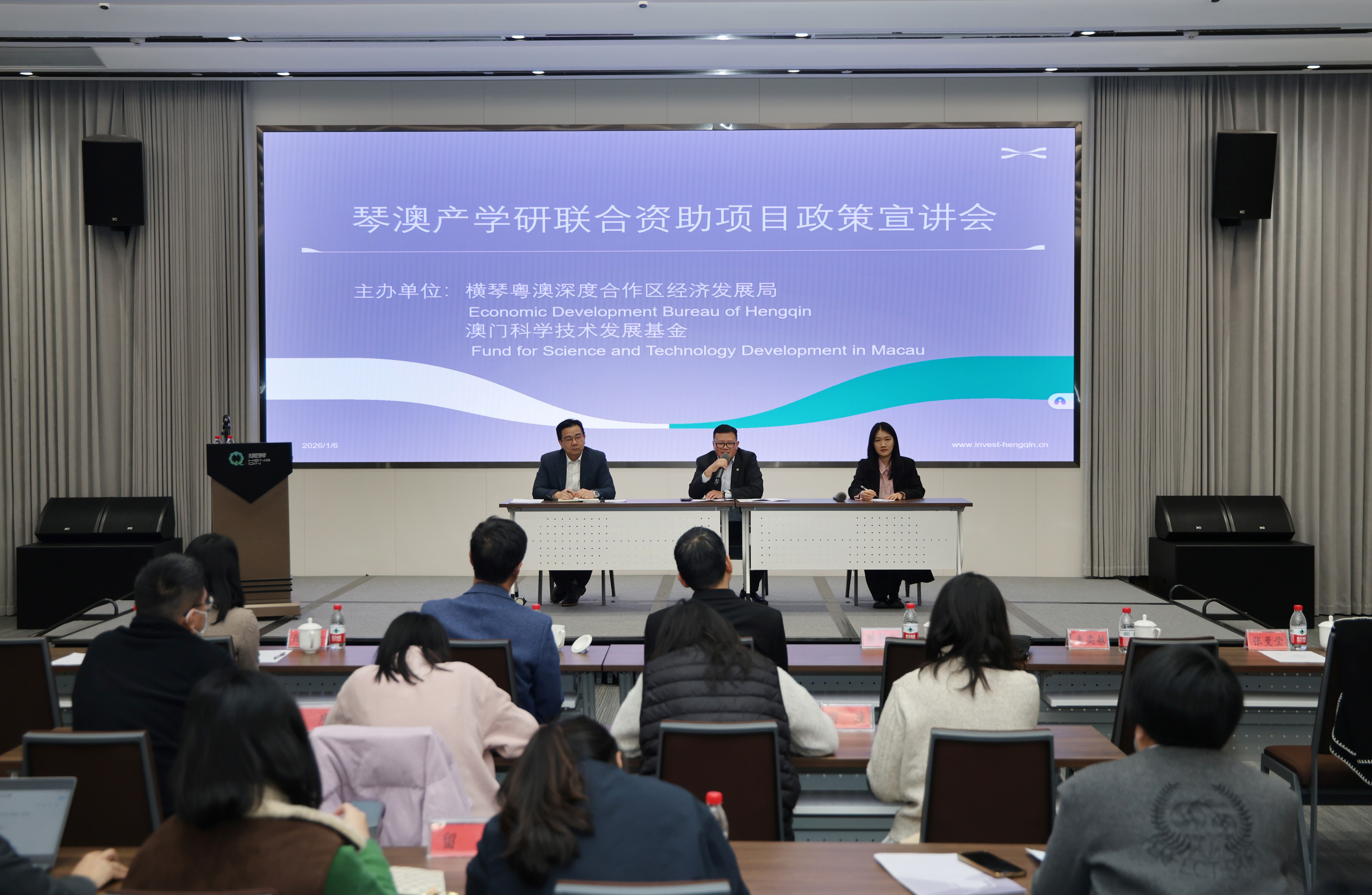 The FDCT and ECDHengqin representatives answering questions from enterprise representatives
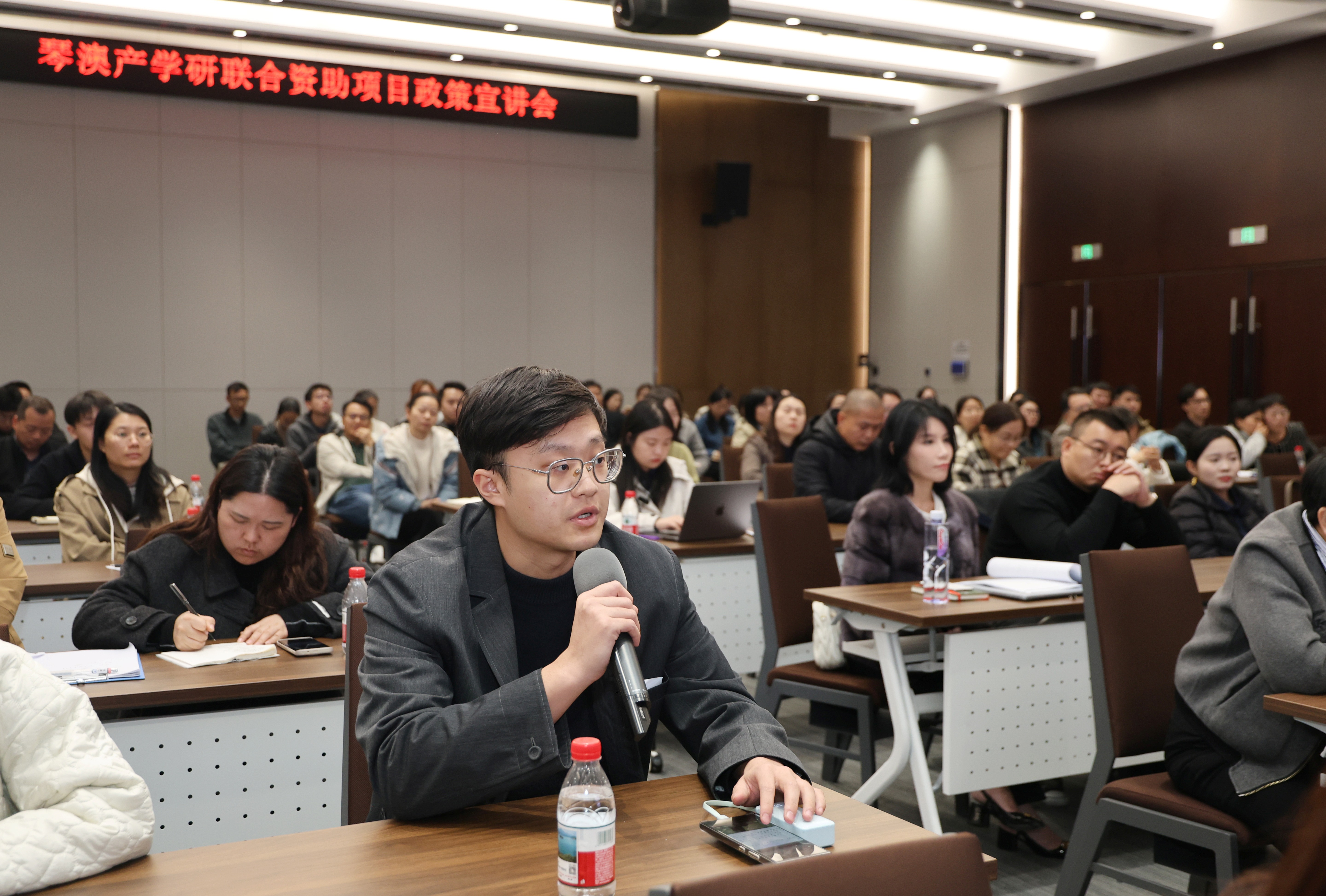 Enterprise representatives consulting on project application requirements on-site

Office address: Avenida do Infante D. Henrique, No. 43-53A, Macau Square, 8th Floor, Unit C and 11th Floor, Unit K, Macao (To apply for project funding, please go to 11th Floor, Unit K)
Office hours: Monday to Thursday: 9:00-13:00, 14:30-17:45;Friday: 9:00-13:00, 14:30-17:30;Tel.: 28788777
Copyright(C) 2021 ALL right reserved.
Office hours: Monday to Thursday: 9:00-13:00, 14:30-17:45;Friday: 9:00-13:00, 14:30-17:30;Tel.: 28788777
Copyright(C) 2021 ALL right reserved.